


All-inclusive overlanding in Namibia can bring guided 4x4 travel, desert and wildlife experiences together, while some activities remain optional. Age rules and group limits depend on the tour: one listed trip accepts travellers from age 12 when accompanied by a guardian over 21, and group sizes vary across packages.
It’s natural to want the practical details before picturing long roads, open skies and nights beneath the stars. Health planning also belongs on the pre-trip checklist, alongside understanding what the itinerary includes. This guide explains which experiences may be optional, how age requirements work on a listed tour, and why group size differs between trips. You’ll have a clearer sense of what to look for when choosing an overlanding journey that suits your travel companions and the kind of Namibian adventure you have in mind.
1. What activities are optional on this trip?
Optional experiences let travellers shape their Namibia itinerary around personal interests. Choices include a visit to Deadvlei, a walk in the Namib Desert, and activities based in Swakopmund: a Mondesa Township Tour, a scenic flight over the Skeleton Coast, and sandboarding.
Which Namibia overland tour operators offer all-inclusive packages? Guided tour operators offer packages with different combinations of transport, accommodation, meals and activities. Compare each itinerary’s inclusions, and treat activities described as optional as additions rather than part of the core route.
Accommodation standards also differ between itineraries. One tour uses three- to four-star lodges with en-suite facilities; another combines hotels, lodges and desert camps. A separate camping itinerary includes 9 nights of participation camping and 3 nights in multi-share hostels, so travellers can see how overnight styles vary.
Meal allowances depend on the package. One itinerary includes 11 breakfasts, 11 lunches and 9 dinners; another includes all breakfasts, 10 dinners and one lunch. These are separate meal plans, not a single combined allowance.
When comparing camping, look at the accommodation and facilities described for the trip rather than assuming every campsite is the same. My African Adventures’ camps include plush bedding, loungers, soft towels, hot showers, flushing toilets, solar power and satellite internet. The guided expeditions also provide camping equipment and handle camp set-up, so you can focus on the journey.
Plan arrival and departure nights separately from the tour’s stated accommodation. Check the itinerary’s start and finish points, then align flights and any additional lodging with those details. That simple step helps distinguish what belongs to the organized journey from arrangements made around it.
2. Overlanding in Namibia – What is This all About?
Overlanding connects Namibia’s desert landscapes and wildlife areas through a planned road itinerary. Routes can include Etosha National Park, the Namib Desert, Sossusvlei and Sesriem Canyon, combining game viewing with time among dunes and rugged scenery.
At Etosha National Park, a full-day safari drive in the overland vehicle offers time to look for wildlife across the park. Near Sossusvlei and Deadvlei, the itinerary includes a 5 km walk through desert terrain. These stops bring distinct experiences together, from wildlife sightings to striking dune landscapes.
How do guided all-inclusive tours compare with self-drive Namibia trips? A guided tour has a driver and organised route logistics, while self-drive travellers handle driving and navigation themselves. The choice depends on whether you prefer an expert-led journey or greater independence on the road.
How many days do Namibia all-inclusive overland tours typically last? Tour durations vary depending on the route and its stops. Compare the itinerary’s travel days with the time allocated to key places, so you can judge the pace of the journey.
What is the best time of year for overlanding in Namibia? July to September brings crisp, clear days around 25 degrees, while nights can reach 0–10 degrees. Pack for cool evenings as well as daytime exploration, especially when camping is part of the itinerary.
Routes across Namibia combine desert landscapes, national parks and wildlife experiences in different ways. Compare the route map, duration, overnight arrangements and itinerary highlights to understand what each journey emphasizes. My African Adventures offers routes including Namibian Horizons, Windhoek South Route and Windhoek North Namibia, each with its own combination of scenery and activities.
3. Age requirements and group size
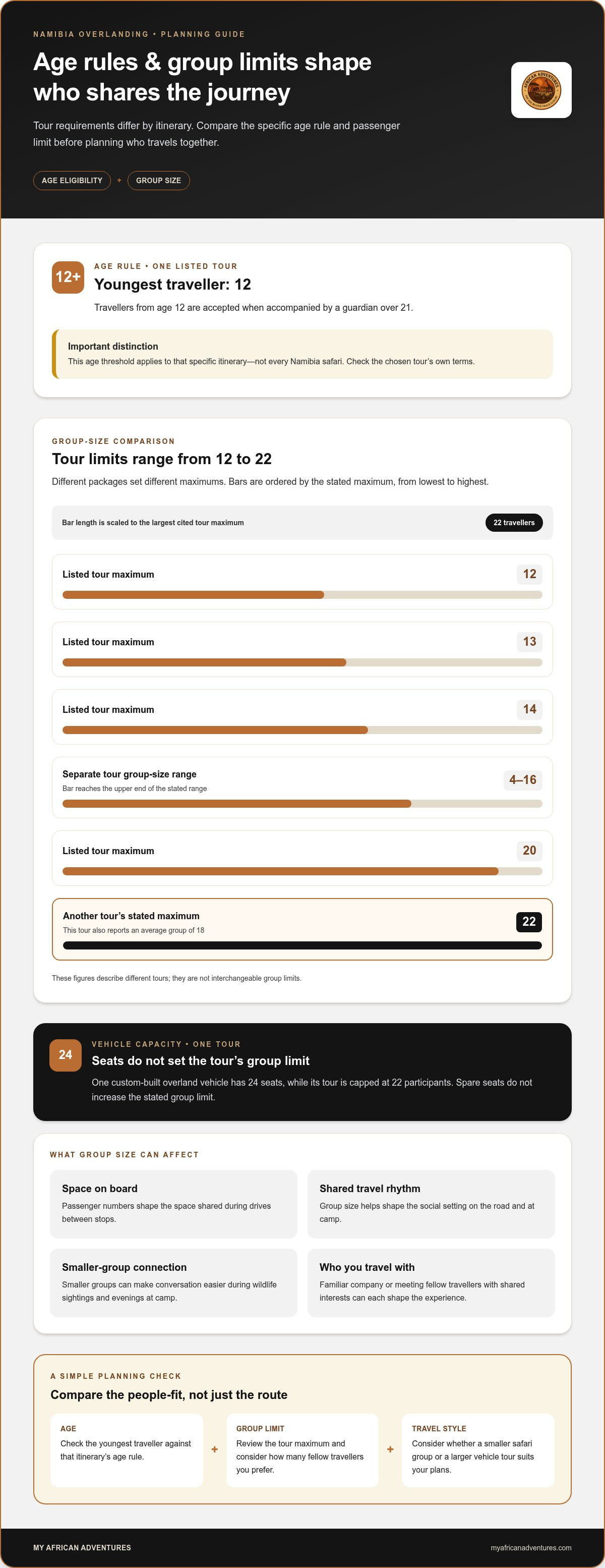
Age limits and passenger numbers vary by Namibia itinerary, so compare the specific tour terms when planning family travel. One listed tour accepts travellers from age 12 when accompanied by a guardian over 21. That threshold applies to that itinerary, rather than every Namibia safari.
Group size varies between tours. Listed Namibia packages set maximums of 12, 13, 14 or 20 people, while another tour has a maximum of 22 participants and averages 18. A separate group-size range runs from four to sixteen travellers. These figures describe different tours, not interchangeable limits.
Vehicle capacity helps explain the distinction: one custom-built overland adventure vehicle has 24 seats, while its tour caps participation at 22. The spare seats don’t increase the tour’s stated group limit. Passenger numbers shape space on board and the shared rhythm of drives between Etosha National Park, Sossusvlei and other stops.
Smaller groups can make conversation easier during a Namibia journey, from wildlife sightings to evenings at camp. Travelling with friends or family offers familiar company; joining a group can bring together people who share an interest in Namibia’s landscapes and wildlife. Those connections may become part of the adventure, alongside the scenery.
For a father-and-son trip, compare the youngest traveller’s age with the chosen itinerary’s rule, then consider its maximum group size and your preferred travel style. A smaller safari group and a larger vehicle tour create different social settings. The details matter, from who can join to how many fellow travellers share each day.
My African Adventures: Guided Premium Namibia Overlanding Tours
My African Adventures turns route ideas into guided, expert-led journeys across Namibia and adjoining regions. Its Guided Premium Namibia Overlanding Tours and Private Small-Group Namibia Expeditions suit travellers who want to explore desert landscapes and wildlife regions without managing the trip logistics themselves. Fully serviced camping and professional support are part of the experience.
For those drawn to nights beneath Namibia’s open skies, Fully Serviced 4x4 Camping Adventures combine camping with professional logistics. Travellers focused on landscapes, wildlife or image-making can explore Namibia Desert, Wildlife and Photography Routes. The right fit depends on your preferred travel style, the people joining you, and whether guided small-group travel matches your plans.
As you compare all-inclusive overlanding in Namibia, use the earlier details as a guide: review the route, accommodation, meals, optional activities, age terms and group limit together. That gives you a clearer picture of what the journey involves before choosing.
Contact My African Adventures to discuss a guided Namibia journey.
Let your Namibia journey take shape
The right itinerary fits the way you want to travel, whether that means sharing the road with a small group or focusing on particular landscapes and activities. An all-inclusive overlanding journey in Namibia brings desert scenery and wildlife encounters together, while expert guides and professional logistics leave you free to enjoy each day.
My African Adventures offers Guided Premium Namibia Overlanding Tours, Private Small-Group Namibia Expeditions and Fully Serviced 4x4 Camping Adventures. If guided travel feels right for your plans, take the next step and discuss the kind of journey you have in mind.
Contact My African Adventures to plan. Namibia’s wide horizons are ready to meet you.
Frequently Asked Questions
Are there any health considerations I should know before travelling?
Yes. Namibia requires a valid yellow fever vaccination certificate if you arrive from a yellow-fever-endemic country or transit for more than 12 hours through an airport in one. The vaccination must be given at least 10 days before entry into the first country on your itinerary. Hydrate, sun protection, and watch heat on Big Daddy; stick to marked areas and local guidance for access-controlled sites.
Overlanding in Namibia – What is This all About?
Overlanding can involve travelling between destinations, with the journey itself forming part of the experience. On My African Adventures expeditions, local guides lead the route and manage the logistics, so travellers can focus on the changing landscapes and shared time on the road. Safety briefings and end-to-end luggage handling help organise each travel day.
What activities are optional on this trip?
Optional activities vary by route. Options include quad-bike rides, mountain-bike trails, professional-grade fishing and massage therapy. Some experiences are specific to particular itineraries: horseback riding is listed for the Richtersveld route, sandboarding for the South Route, and canoeing or tubing for the Caprivi route. Compare the route details to choose activities that match your interests.
What are the age restrictions for this trip?
Age requirements depend on the tour. One listed Namibia overland tour accepts travellers aged 12 and older when accompanied by a guardian over 21; this is a rule for that tour, not a universal age restriction. My African Adventures’ guided expeditions are designed for private groups and families, with a maximum of 6 guests, making group composition a useful planning consideration.
What are the main highlights of this trip?
Highlights can include wildlife viewing in Etosha National Park, desert scenery around Sossusvlei, and guided fishing along the Skeleton Coast on the Namibian Horizons route. Travellers can also enjoy quad-bike and mountain-bike excursions, professional photography support, and night-sky viewing with a Dobsonian telescope. The exact combination depends on the selected route and its itinerary.