


Namibia is generally considered safe for travellers who take normal safety precautions. If you’re asking whether Namibia tours are safe, the practical answer is yes: stay alert to road conditions, secure your belongings and use sensible precautions in towns.
It’s natural to weigh the freedom of desert roads and open landscapes against concerns about crime and remote travel. Petty theft and vehicle break-ins are the main visitor concerns in urban centres. This guide explains practical ways to reduce those risks and prepare for the journey, including how guided travel can help with logistics so you can focus on the experience.
1. Is Namibia Safe To Visit?
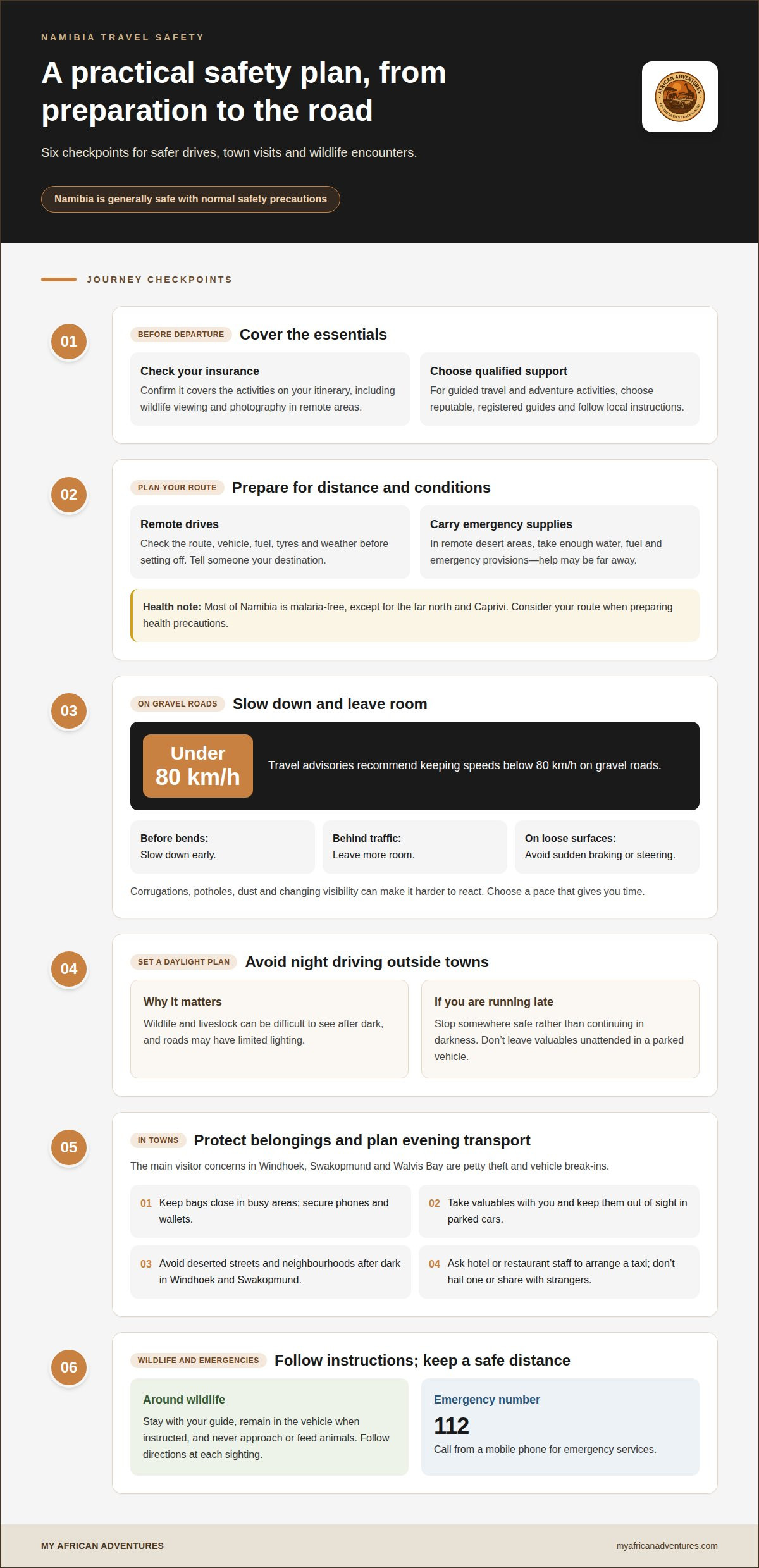
Namibia is generally safe for travellers, with advice to exercise normal safety precautions. Visitors often ask, “are Namibia tours safe?” Guided travel can support a well-planned visit when you follow local instructions and choose reputable, registered guides for adventure activities. Protect valuables and plan transport rather than avoiding travel altogether. From a mobile phone, call 112 for emergency services, according to the UK Foreign, Commonwealth & Development Office.
Plan for safety before departure. Check that your travel insurance covers the activities on your itinerary, including wildlife viewing and photography in remote areas. Use suitable safety equipment and follow your guide’s instructions, especially around wildlife and in changing desert conditions. For remote drives, check the vehicle and carry water and emergency supplies, since help may be far away.
Women travelling alone can reduce exposure to street risks by arranging a taxi rather than hailing one. Don’t share a taxi with strangers or board one that already has passengers; sit in the back seat. Keep valuables secure, and arrange transport through trusted accommodation or restaurants, particularly after dark.
Older travellers, typically aged 65 and above, should prepare for Namibia’s temperature extremes. Winter nights can be very cold, while daytime heat can be intense; drink water regularly and protect yourself from the sun. For first-time visitors still asking, “are Namibia tours safe?”, practical preparation helps make travel more manageable. Most of Namibia is malaria-free, except for the far north and Caprivi, so consider your route when preparing health precautions.
2. What precautions should tourists take in Namibia?
Namibia’s gravel roads demand slower, more attentive driving than paved routes. Travel advisories recommend keeping speeds below 80 km/h on gravel roads, according to the UK Foreign, Commonwealth & Development Office. Loose surfaces can reduce control, while corrugations and potholes can appear with little warning. Slow down before bends, leave more room behind other vehicles, and avoid sudden braking or steering. Poor local driving practices, limited street lighting, pedestrians, livestock and wildlife also create hazards.
Plan drives for daylight. Travel advisories recommend avoiding night driving outside towns, where wildlife and livestock can be difficult to see. If you’re running late, stop somewhere safe instead of continuing in darkness. Before setting off, check the route, fuel, tyres and weather, and let someone know your destination. In remote desert areas, carry enough fuel, water and emergency provisions. Don’t leave valuables unattended in a parked vehicle.
How safe are Namibia safari tours and wildlife encounters? Guided outings can help visitors follow local instructions and keep an appropriate distance from animals. Stay with your guide, remain in the vehicle when instructed, and never approach or feed wildlife. Animal behaviour and conditions vary, so follow directions at each sighting.
Self-driving visitors should take extra care because road conditions vary across the country. Road conditions can vary, so self-driving visitors should drive carefully and slowly. Choose a pace that allows time to react, especially when dust or a rough surface reduces visibility. If you’re weighing a guided journey through Namibia, guided Namibia overlanding can take the demands of route planning and remote driving out of your hands.
3. Crime in Windhoek and coastal towns
The main visitor crime concerns in Namibia are petty theft and vehicle break-ins. In Windhoek, Swakopmund and Walvis Bay, tourists may encounter pickpocketing, bag-snatching or theft from cars. Take practical precautions: don’t leave valuables visible or unattended. Keep bags close in busy areas, and secure phones and wallets before entering crowded streets.
Are there areas in Namibia tourists should avoid? In Windhoek and Swakopmund, avoid deserted streets and neighbourhoods after dark. Ask hotel or restaurant staff to arrange a taxi instead of walking through quiet areas at night. This advice applies year-round: even a familiar destination can feel different after dark when fewer people are around.
What are Namibia’s crime rates and common tourist scams? Petty crime is common in urban centres, with the main visitor risks being pickpocketing, bag-snatching and car break-ins. Rather than relying on an unspecified crime rate or assuming a particular scam is common, focus on these concerns and take ordinary care with your belongings.
In Windhoek, choose busy, well-lit routes and keep an eye on your bags in crowds. When parking in Swakopmund or Walvis Bay, take valuables with you and check the vehicle before leaving. Don’t leave cameras, phones or luggage visible through the windows. If a street feels isolated, return to a staffed venue and arrange transport there.
Prefer to explore Namibia with the route and logistics handled? Plan a guided Namibia journey built around your travel priorities.
Petty crime in Namibian urban centres includes pickpocketing, bag-snatching and theft from vehicles. Keep these risks in mind when moving around town, but don’t assume every outing is unsafe: practical care with belongings and vehicles can help reduce exposure.
For evening travel in Windhoek and Swakopmund, avoid deserted streets and neighbourhoods after dark. Ask hotel or restaurant staff to arrange a taxi.
My African Adventures: Guided Premium Namibia Overlanding Tours
My African Adventures helps travellers explore Namibia through guided premium overlanding tours and private small-group expeditions. If remote roads, route planning or balancing wildlife viewing with desert exploration feels daunting, an expert-led journey can make those logistics easier to manage. Fully serviced 4x4 camping adventures bring the practical arrangements together, while Namibia desert, wildlife and photography routes suit travellers drawn to wide-open landscapes and time for meaningful encounters.
Guided travel cannot remove every risk, but professional logistics provide structure for exploring Namibia. Choose a route around the experiences that matter to you, from desert scenery to wildlife and photography. My African Adventures offers guided premium overlanding tours with fully serviced camping and expert-led support. Explore the guided journeys to find a route that suits your interests.
Shape a Namibia journey that feels right for you
For travellers asking whether Namibia tours are safe, confidence often comes from choosing a route and pace that suit their comfort with remote travel. Consider the balance you want between desert landscapes, wildlife viewing, photography and time in towns. These preferences can help you choose a journey that feels rewarding rather than rushed.
My African Adventures offers guided journeys through Namibia’s varied landscapes, with professional logistics and fully serviced camping. Decide which experiences matter most, then explore the routes and discuss a tailored expedition.
Contact My African Adventures to begin planning your Namibia adventure. The country’s immense horizons are ready to meet you.
Frequently Asked Questions
Is Namibia Safe To Visit?
Yes, Namibia is generally safe for visitors who take ordinary precautions. One practical health consideration is drinking water: avoid tap water and ice cubes, since the source of water used for ice may be difficult to identify. Choose sealed drinking water, especially when travelling between towns, and keep some accessible during long outings in hot, exposed terrain.
How politically stable is Namibia?
Namibia has been a stable democracy since independence in 1990. It ranked 50th globally and 4th in Africa on the 2025 Global Peace Index. These details offer useful context for travel planning, while everyday awareness still matters. Keep an eye on local developments before departure and follow instructions from authorities if circumstances change during your stay.
Is Namibia safer than other African safari destinations?
No single comparison captures safety across every African safari destination: risks vary by route, activity and setting. Namibia’s visitor concerns include urban theft, remote travel and natural conditions. Consider the practical demands of your own itinerary, such as time in towns, long drives and wildlife experiences, rather than relying on a simple country-to-country label.
What are the real safety risks in Namibia?
Alongside theft and road hazards, pay attention to heat exposure and water hygiene. Namibia’s sun can burn skin even when temperatures feel cooler, so cover up and use sunscreen. On routes involving Big Daddy, follow the exact advice: “Hydrate, sun protection, and watch heat on Big Daddy.” At camps, “Keep camps clean and food secured.”
What precautions should tourists take in Namibia?
At protected sites and camps, follow local rules rather than improvising. “Stick to marked areas and local guidance for access-controlled sites.” “Use headlamps after dark, especially in wildlife areas.” In Etosha National Park, “No bush walking inside Etosha National Park; only short walks at camp are permitted.” These limits help visitors avoid preventable encounters and unsafe terrain.