


What if dinner’s most memorable setting had no walls, only the wide Namibian sky and the quiet sounds of the wilderness? A namibia bush dining experience is less about arriving at a dedicated restaurant than sharing a meal outdoors, where the landscape becomes part of the occasion. The adventure is real, and on a guided expedition, so are the practical comforts.
Wondering what the meal feels like, how comfortable camp can be, or how to behave responsibly around wildlife? It helps to know how outdoor dining fits into the day. This guide explains the rhythm of meals on a fully serviced journey, the camp facilities that add comfort, and the safety guidance that helps you enjoy the surroundings without treating the wilderness like a dining room.
What Makes a Namibia Bush Dining Experience Memorable?
As the last light crosses the desert and the air begins to cool, conversation gathers around a meal beneath an open sky. That change of setting is at the heart of a namibia bush dining experience: the landscape shapes the mood as much as the food and company do. There’s no need for a wildlife sighting or elaborate event. The surroundings make the moment distinct.
“Bush dining” can mean a dedicated outdoor dining venue, but it can also describe meals enjoyed during a guided expedition. On a fully serviced journey, meals are part of the day’s rhythm, alongside snacks, drinks, morning coffee and sundowners. With max 6 guests, there’s room to settle in, share stories and take in the changing scene at an unhurried pace. Namibia’s landscapes and wildlife are central to the country’s travel appeal, as the overview of Tourism in Namibia illustrates.
How is bush dining different from a conventional restaurant meal?
A restaurant offers a defined room, steady lighting and a familiar separation from the outdoors. Bush dining brings the setting closer. The horizon may remain in view as the light fades, while the sounds and stillness of the landscape become part of the evening. There’s no fixed backdrop or guarantee of a particular scene: the experience changes with the place and the hour.
The meal can feel less like a stop on an itinerary and more like a shared pause in the expedition. The company and open surroundings invite unhurried conversation. Camp comforts, including loungers and plush bedding, help balance time in the wilderness with practical ease.
How to Enjoy Bush Dining Comfortably and Responsibly
A relaxed outdoor meal starts with adapting to the conditions rather than expecting the wilderness to feel like a dining room. Follow your guide’s advice, use the expedition preparation guide and packing list, and take sensible steps for sun and heat. Hydrate, sun protection, and watch heat on Big Daddy; stick to marked areas and local guidance for access-controlled sites.
What practical details help an outdoor meal feel relaxed?
Thoughtful camp facilities make a difference without taking the landscape out of view. Camps have loungers, soft towels, hot showers, flushing toilets, solar power and satellite internet. Camp set-up and expedition logistics are handled as part of the guided journey. Daily three meals, snacks, drinks, morning coffee and sundowners give the day a clear rhythm, from the first pause to the evening meal.
Comfort also depends on moving at the pace of the setting. Listen to the safety briefing, stay within areas your guide indicates, and let the guide handle the practical details while you focus on the meal and changing light. Responsible travel matters in a country where conservation and community-based tourism are closely connected; WWF's work in Namibia offers further context on conservation efforts.
In wildlife areas, awareness is especially important after dusk. No bush walking inside Etosha; keep camps clean and food secured; use headlamps and stay aware after dark, especially in wildlife areas. These habits help you respect the wilderness and enjoy the evening safely. On a guided Namibia overlanding expedition, expert local guides provide safety briefings and handle expedition logistics, so you can focus on the experience while following their guidance.
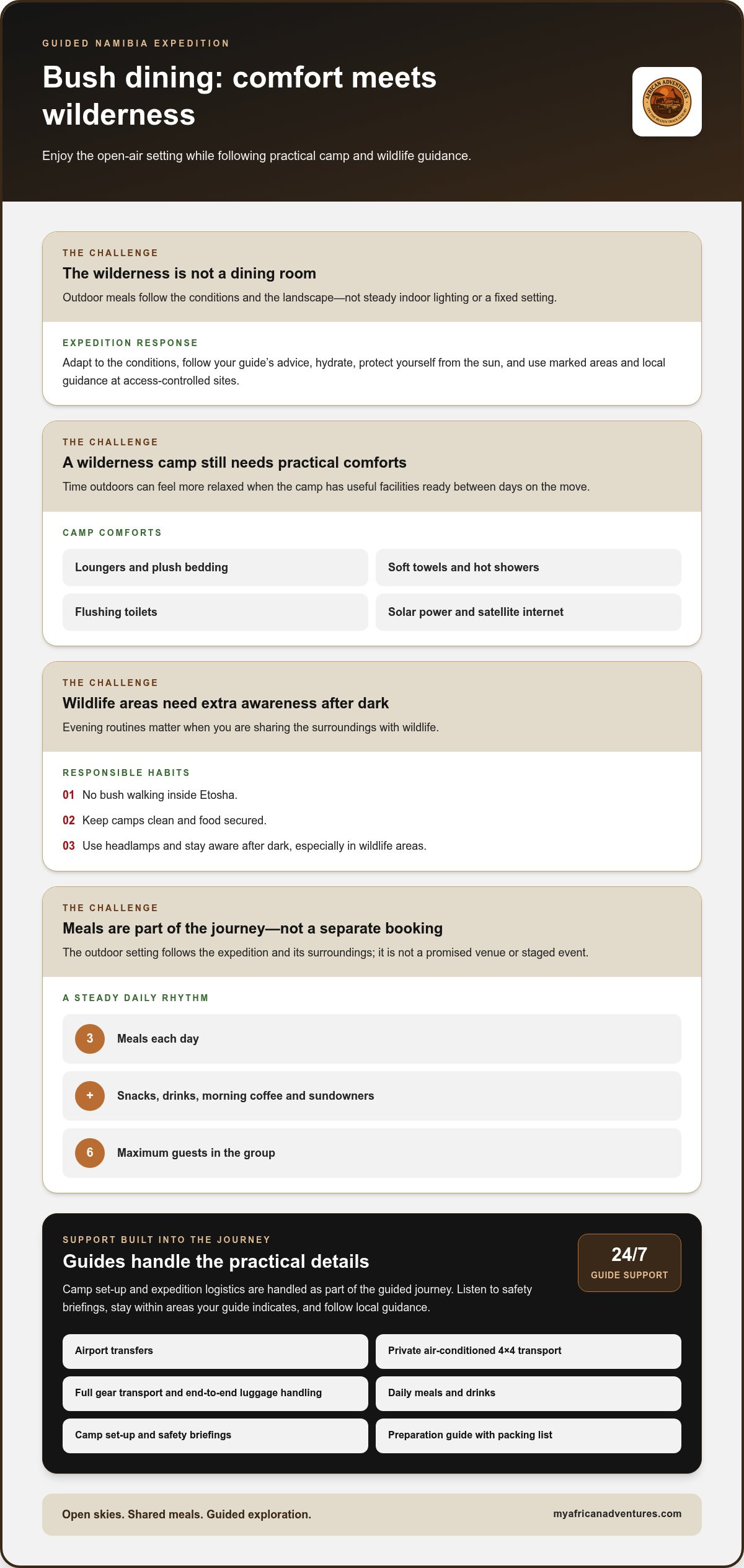
Bush Dining on a Guided Namibia Expedition: Meals, Camp, and Connection
On a guided expedition, meals are woven into the journey rather than arranged as a separate bush-dining booking. The day includes morning coffee, three meals, snacks, an open cooler with drinks and sundowners. An outdoor meal may become a memorable pause in that rhythm, but the setting follows the expedition and its surroundings. It isn’t a promised venue or staged event.
This is part of a fully serviced journey through Namibia, where travel, camp and time outdoors come together. The country’s distinctive attractions help shape its tourism appeal, explored in Namibia's Travel and Tourism Industry. Shared meals also give travellers time to reflect on the day and enjoy one another’s company.
What comforts and meals are part of the expedition rhythm?
Camp combines wilderness immersion with considered comforts: plush bedding, loungers, soft towels, hot showers, flushing toilets, solar power and satellite internet. These facilities offer ease between days on the move without turning the experience into a conventional resort stay.
Guides handle camp set-up and expedition logistics, while guests settle into the surroundings. Included services are airport transfers, private air-conditioned 4×4 transport, full gear transport, end-to-end luggage handling, daily meals and drinks, camp set-up, 24/7 guide support, safety briefings, and a preparation guide with packing list. Groups have max 6 guests, creating a close-knit setting for shared moments. A namibia bush dining experience is best understood in this context: not a standalone reservation, but one part of a guided overland journey, shaped by the food, company and wilderness around you.
Let Your Namibia Journey Unfold Around the Table
A memorable meal may be the one that invites you to slow down, listen to the landscape and share stories from the day. A namibia bush dining experience can become a meaningful part of a wider journey, with the setting and company making each pause feel personal.
On a guided expedition, daily meals and drinks are part of the journey, expert local guides provide 24/7 support, and groups have max 6 guests. That thoughtful structure lets you focus on the moment while staying close to the wilderness.
Bring open skies, shared moments and guided exploration together on your next adventure. Explore My African Adventures’ guided Namibia expeditions and start imagining the journey ahead.
Namibia is ready to welcome you to the table.
Frequently Asked Questions
What is a Namibia bush dining experience?
A namibia bush dining experience is a meal enjoyed outdoors in a wilderness setting, where the landscape and company shape the occasion. It can describe dining at a dedicated outdoor venue or enjoying meals as part of a guided expedition. On an expedition, meals fit into the journey’s daily rhythm rather than being a separate venue booking.
Is bush dining comfortable in a wilderness setting?
Yes. An outdoor meal can feel comfortable when a wilderness expedition includes well-equipped camp facilities. My African Adventures’ camps have plush bedding, loungers, soft towels, hot showers, flushing toilets, solar power and satellite internet. These practical comforts support time outdoors without changing the setting into an indoor dining environment. Follow your guide’s instructions and local safety guidance throughout the journey.
Can first-time campers enjoy outdoor meals on a guided expedition?
Yes. First-time campers can enjoy outdoor meals on a guided expedition without managing every camp detail themselves. Camp set-up, daily meals and drinks, private air-conditioned 4×4 transport, and 24/7 guide support are provided. The preparation guide and packing list help you plan what to bring before departure, so you can arrive ready for an outdoor journey.
How should guests stay safe around wildlife during outdoor dining?
Follow your guide’s instructions, respect local access rules, and be especially attentive after dark. Keep food secured and use a headlamp when moving around camp at night. No bush walking inside Etosha; keep camps clean and food secured; use headlamps and stay aware after dark, especially in wildlife areas. These habits support responsible awareness in wilderness settings.