


What if the most critical item for your expedition isn't a rugged survival tool, but a versatile silk scarf or a high-performance base layer? When you transition from the blistering heat of the Sossusvlei dunes to the sudden, sharp chill of a Skeleton Coast evening, your comfort depends entirely on a sophisticated strategy. Knowing exactly what to pack for a guided 4x4 safari namibia is the difference between simply enduring the landscape and truly connecting with its ancient rhythms.
You likely share the common concern that a dusty trail might compromise your expensive optics or that your favorite luggage won't survive the transition into a specialized expedition vehicle. We understand that you seek the thrill of the wild without sacrificing the refinements of a premium journey. This definitive 2026 checklist provides a curated selection of essentials tailored for our fully serviced adventures, focusing on personal well-being and elite photography gear. You'll discover the secrets of the layering philosophy, learn how to protect your tech from the fine Kalahari sands, and gain clarity on the latest 2026 entry and drone regulations. We'll ensure your focus remains on the horizon while we handle the complexities of the African bush.
Key Takeaways
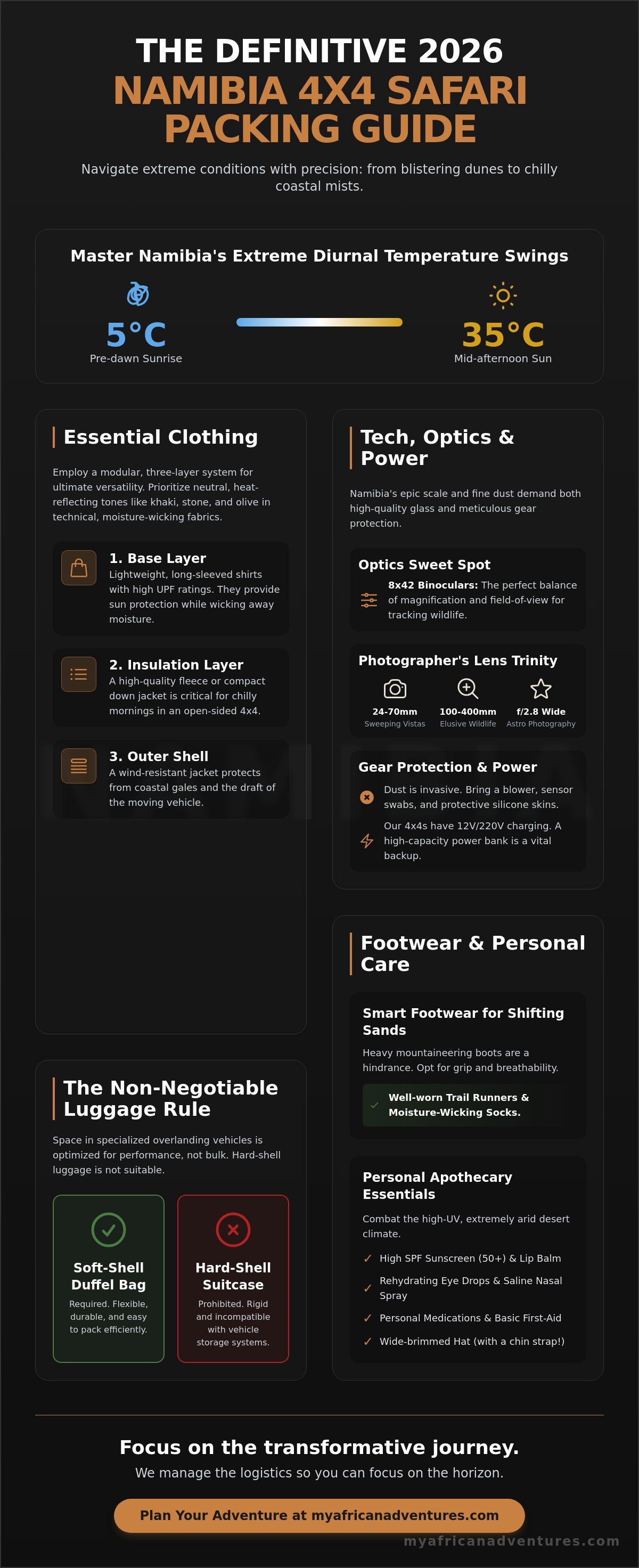
- Master the art of layering with moisture-wicking fabrics to navigate dramatic temperature swings from 5°C sunrises to 35°C afternoons.
- Identify the specific optics and camera lenses required to capture Namibia’s stark landscapes and elusive, desert-adapted wildlife with professional precision.
- Learn why soft-shell duffel bags are a non-negotiable requirement for seamless packing and efficiency within specialized overlanding vehicles.
- Refine your personal apothecary with essential items designed to combat the high-UV and extremely arid climate of the Namib desert.
- Gain clarity on exactly what to pack for a guided 4x4 safari namibia so you can focus on the transformative journey while we manage the logistics.
Mastering the Desert Climate: Essential Clothing and Footwear
The Namib desert is a land of profound contrasts. In the pre-dawn silence of the dunes, the air carries a sharp, crystalline chill that belies the intense heat to come. Understanding Namibia's diverse geography is the first step in mastering your wardrobe. This arid environment experiences extreme diurnal temperature shifts; you might wake to a bracing 5°C and find yourself under a 35°C sun by mid-afternoon. Your strategy for what to pack for a guided 4x4 safari namibia must center on high-performance versatility. We recommend a palette of stone, khaki, and olive. These neutral tones reflect the desert's heat while ensuring you remain a discreet observer of the wildlife. Prioritize technical, moisture-wicking synthetics or breathable linen. Unlike heavy cotton, which traps moisture and clings to the pervasive desert dust, these fabrics keep you cool and dry.
The Three-Layer System for Namibian Sunrises
Success in the desert requires a modular approach. The goal is to peel away layers as the sun climbs, maintaining a steady core temperature. Consider these three essentials:
- Base Layers: Choose lightweight, long-sleeved shirts with high UPF ratings. These provide a cooling effect while shielding your skin from the relentless midday sun.
- Insulation: A high-quality fleece or a compact down jacket is essential for those early morning departures in an open-sided vehicle.
- Outer Shell: A wind-resistant jacket protects you from the coastal gales of the Skeleton Coast and the draft of the moving 4x4.
Footwear and Extremities
While the terrain looks rugged, heavy mountaineering boots are often a hindrance. Their weight becomes a liability when climbing the soft, shifting sands of Big Daddy or Dune 45. Instead, opt for high-quality trail runners. They offer the perfect balance of grip and breathability. Ensure they are well broken-in before you arrive. Pair them with moisture-wicking socks to prevent the friction that causes blisters in the heat. Finally, never underestimate the desert wind. A wide-brimmed hat is vital, but ensure it has a sturdy chin strap. Without one, your headwear will likely become a permanent resident of the Sossusvlei dunes.
Tech and Optics: Capturing the Namibian Wilderness
Namibia is a visual feast where the light changes by the minute, casting long, dramatic shadows across the oldest desert on earth. To truly appreciate the scale of the wildlife at Etosha or the intricate textures of the Sossusvlei dunes, your optics must be as refined as your itinerary. We've found that 8x42 binoculars represent the absolute sweet spot for the discerning traveler. They offer enough magnification to spot a desert-adapted elephant in the distance while providing a wide enough field of view to track a moving predator. When considering what to pack for a guided 4x4 safari namibia, high-quality glass is your most valuable asset. It transforms a simple sighting into an intimate encounter.
Dust is the constant companion of any African expedition, and the fine, silicate sands of the Namib are particularly invasive. Protecting your high-end sensors is paramount. We recommend using silicone protective skins for your camera bodies and keeping a comprehensive cleaning kit, complete with a blower and sensor swabs, in your day bag. While you should consult the official travel advice for general safety, your technical safety depends on how you manage your gear in these arid conditions. These technical details ensure your focus remains on the artistry of the journey during our guided namibia tours.
Photography Essentials for the Desert
Your lens choice dictates the story you tell. A 24-70mm lens is indispensable for the sweeping vistas of the Skeleton Coast, while a 100-400mm telephoto is essential for wildlife encounters. For stability, a lightweight carbon fiber tripod is excellent for sunrise shots, but don't overlook the humble beanbag. It's often more practical for steadying a long lens on the frame of the vehicle. If you're drawn to the celestial, bring a fast wide-angle lens with an aperture of f/2.8 or lower to capture the Milky Way in one of the world's few International Dark Sky Reserves.
Staying Connected and Powered
Modern expeditions shouldn't mean a total disconnect from the digital world. Our specialized 4x4 systems are equipped with both 12V and 220V charging points, allowing you to replenish batteries while we navigate the terrain. We suggest bringing a high-capacity power bank as a secondary reserve for long days in the field. Manage your memories wisely; use high-speed UHS-II cards and follow the 'two-copy' rule by backing up your daily captures to a rugged external drive. It's these small logistical certainties that allow you to immerse yourself fully in the transformative beauty of the wilderness.
Health, Comfort, and the 'Guided' Advantage
One of the greatest luxuries of a premium expedition is the mental space it affords you. When deciding what to pack for a guided 4x4 safari namibia, the most important realization is what you can leave behind. Our fully serviced 4x4 camping adventures mean you won't need to worry about heavy recovery gear, tents, or kitchen equipment. We handle the rugged complexities, acting as the trusted guardians of your logistics so you can focus on the sensory richness of the landscape. However, personal comfort remains your domain. Soft-shell duffel bags are mandatory for these journeys. Unlike rigid suitcases, these flexible containers nestle into the 4x4's storage compartments without wasting precious space or rattling on gravel roads.
Your personal apothecary should prioritize the arid climate. The Namibian air is exceptionally dry, often leading to parched skin or nasal discomfort. Pack a high-quality lip balm and a saline nasal spray to maintain your well-being during long drives through the dunes. If your journey takes you into northern regions like the Zambezi or Kunene during the rainy season from November to April, ensure your kit includes malaria prophylaxis as recommended by your physician. While we provide comprehensive first aid equipment, these small personal health items ensure you feel your best as you transition between the wild and the refined.
Skin and Eye Protection
The desert sun is uncompromising, requiring a sophisticated approach to protection. We recommend a dry-touch SPF 50+ sunscreen as your primary defense. These specific formulas are superior in the desert because they don't allow the fine dust to adhere to your skin, preventing the gritty texture caused by oilier lotions. For your eyes, polarized sunglasses are essential to cut the intense glare from the Etosha salt pans. If you wear contact lenses, bring a surplus of lubricating drops. The combination of wind and fine sand can be taxing, and a quick refresh ensures your vision remains clear for every wildlife encounter.
The Premium Comfort Kit
True luxury is often found in the small details that facilitate deep relaxation. While our expeditions emphasize a profound connection with nature, a few personal items enhance the transition. Noise-cancelling headphones are a revelation during the longer transits between remote camps, allowing you to retreat into a private sanctuary of sound. A silk eye mask is equally valuable for ensuring deep rest during early nights spent under the world-class dark skies. Finally, maintain your hygiene with biodegradable wet wipes and a high-alcohol hand sanitizer. These simple tools bridge the gap between the untamed nature of the bush and the effortless service of a curated adventure.
Preparing for Your Namibian Odyssey
The vast, silent expanses of the Namib are best experienced when you aren't distracted by the logistics of the journey. By mastering the art of the three-layer clothing system and securing your high-end optics against the pervasive desert dust, you've already handled the most critical preparations. Refining your understanding of what to pack for a guided 4x4 safari namibia allows you to step into the wilderness with absolute confidence. You can leave the heavy recovery gear and camp management to us, focusing instead on the transformative beauty of the dunes and the rare wildlife encounters that define our photography-focused itineraries.
True exploration is about more than just seeing; it's about the connection you forge with the landscape and the memories that remain long after the dust has settled. Our fully serviced premium camping ensures that every moment is defined by comfort and expert-led logistics. If you're ready to trade the ordinary for the extraordinary, we invite you to Book Your Premium Namibia Expedition with My African Adventures. The ancient rhythms of the desert are waiting for you. Let's begin the journey together.
Frequently Asked Questions
Do I need to bring my own sleeping bag for a guided camping tour?
You don't need to bring your own sleeping bag. On our fully serviced 4x4 camping adventures, we provide premium bedrolls, high-quality linens, and warm duvets specifically chosen to keep you comfortable during the desert's cool nights. This expert curation reduces your luggage bulk significantly. It allows you to prioritize personal items and photography gear instead of heavy camping equipment.
What is the maximum luggage weight for a Namibia 4x4 safari?
The maximum luggage weight is 20 kilograms per person. This limit is essential for maintaining the vehicle's balance and performance while we navigate deep sand and rocky mountain passes. We recommend choosing lightweight, high-performance fabrics to stay within this limit. A well-considered kit ensures a seamless transition between the rugged terrain and the refined comfort of our mobile camps.
Are hard-shell suitcases allowed on guided overlanding expeditions?
Hard-shell suitcases are not allowed on our expeditions. You must use soft-shell duffel bags because they are flexible enough to be packed into the specialized storage compartments of our 4x4 vehicles. Rigid suitcases are difficult to secure and are prone to cracking due to the persistent vibrations of Namibia's gravel roads. Soft luggage ensures your belongings remain protected and accessible throughout the journey.
What kind of electrical plugs are used in Namibia for charging my gear?
Namibia primarily uses the Type M plug, which features three large round pins in a triangular pattern. You might also encounter Type D in older establishments. While our vehicles are equipped with integrated charging systems for your tech, bringing a dedicated universal adapter is a wise precaution. This ensures your cameras and devices are always ready to capture the next breathtaking horizon.
Is it necessary to bring formal clothing for any part of the safari?
Formal clothing is not necessary for any part of the safari. The atmosphere of our expeditions is one of refined ruggedness where functionality is favored over tradition. A simple smart-casual outfit is more than enough for an occasional evening at a wilderness lodge. We recommend focusing your packing space on high-performance fabrics that handle the dust and heat of the day with ease.
How do I protect my camera from the fine sand of the Namib Desert?
Use silicone protective skins and high-quality dry bags to shield your gear from the invasive desert sand. Avoid changing lenses in the open air, as the fine dust can settle on your sensor instantly. When considering what to pack for a guided 4x4 safari namibia, include a manual blower and a meticulous cleaning kit. These simple tools are vital for maintaining your optics in the arid environment.


