


What is the best time to visit Namibia? It depends on what you hope to experience. The dry months from May to October can bring rewarding wildlife viewing as animals gather near water. The rainy season can offer greener scenery, birdlife and newborn animals. Each season has its own appeal and practical trade-offs.
Seasonal advice can seem contradictory because the best dates for game viewing may not be ideal for lush landscape photography or comfortable overlanding. This guide compares Namibia’s seasons so you can choose travel dates that fit your priorities. Learn how rain, heat, cool nights and road conditions can shape a journey, and what to consider when planning a guided expedition through Namibia’s landscapes.
Best time to visit Namibia: what each season can offer
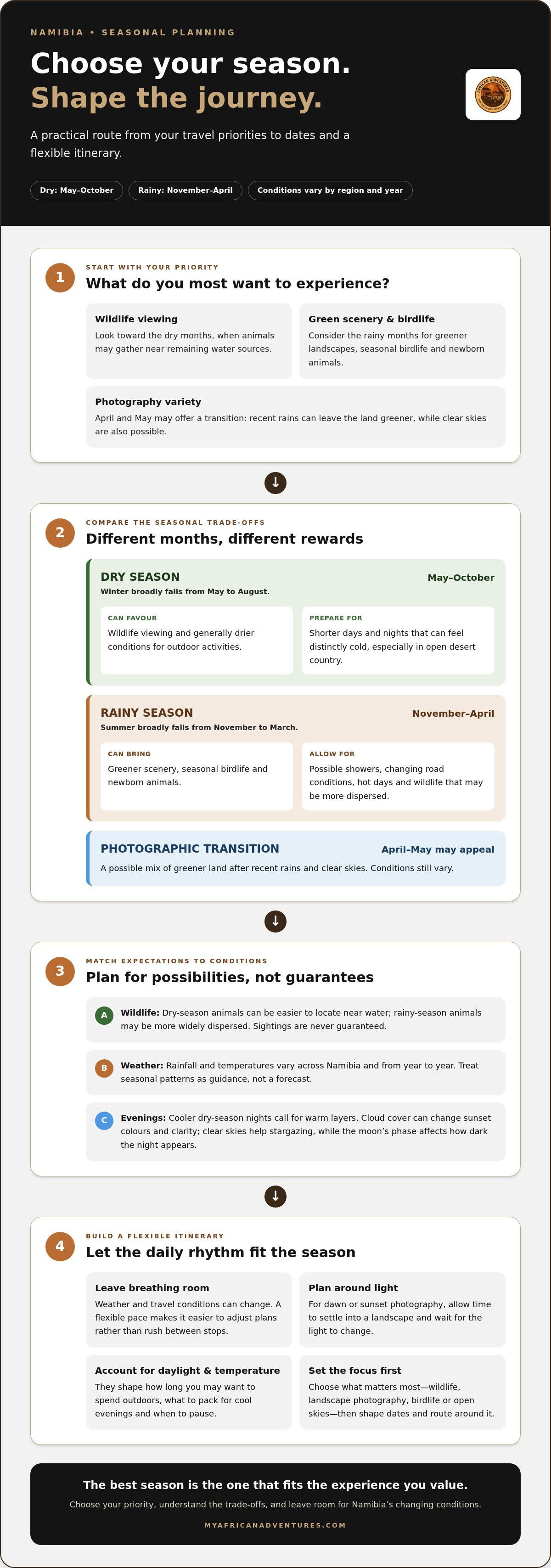
The dry and rainy seasons suit different travel priorities, so the best time to visit Namibia depends on whether you value easier wildlife viewing or greener scenery and seasonal birdlife. From May to October, limited surface water can draw animals towards remaining water sources, making wildlife easier to spot in some areas. From November to April, rain can transform the landscape, though animals may be more dispersed. Neither season guarantees particular weather or sightings.
When are Namibia’s dry and rainy seasons?
Namibia is in the Southern Hemisphere, where summer broadly falls from November to March and winter from May to August. The rainy season generally runs from November through April, while the drier stretch is usually May to October. These are broad patterns, not a forecast: rainfall and temperatures vary across the country and from year to year. Namibia’s climate reflects this range of seasonal and regional conditions.
Rain is more likely during the summer months, when days are also longer and temperatures can be hot. Winter is generally drier, with mild or warm daylight hours in many areas, shorter days and nights that can feel distinctly cold, especially in open desert country. Pack for changing conditions rather than assuming every day will match the season’s reputation.
In brief: Namibia’s dry season often favours wildlife viewing and drier travel conditions. The rainy season can bring green landscapes, birdlife and young animals, along with less predictable showers and wildlife that may be harder to find. A guided overlanding route can be paced around these trade-offs, with the journey focused on the landscapes and experiences that matter most to you.
Choose the best time to visit Namibia for wildlife, scenery or photography
The best time to visit Namibia depends on what you want your days in the landscape to hold. In the dry season, wildlife can be easier to locate as animals gather near remaining water sources, although sightings are never guaranteed. Rainy months can bring fresh green tones, birdlife and newborn animals, with wildlife more widely dispersed. April and May may appeal to photographers seeking a transition: recent rains can leave the land greener, while clear skies are also possible.
Which season fits your travel priorities?
Choose the dry season if wildlife viewing is your main focus and you prefer generally drier conditions for outdoor activities. Choose the rainy season if you’re drawn to greener scenery and seasonal birdlife, and are comfortable with the possibility of showers and changing road conditions. For photography, shoulder season may offer a mix of landscapes and light, but conditions still vary. The climate of Namibia is shaped by regional influences, so the feel of a season can differ along a route.
Sunsets are part of the appeal in every season, but cloud cover can change the colours and clarity of the sky. Stargazing also depends on conditions: clear skies help, while the moon’s phase affects how dark the night appears. Cooler dry season nights call for warm layers, while a measured pace can make hot rainy season days more comfortable.
In short: favour the dry months for stronger wildlife viewing conditions, consider the rainy months for greener scenery and birdlife, and look to the shoulder season for photographic variety. For more on planning around light and logistics, explore this Namibia photography expedition guide. A guided overlanding journey can bring these seasonal priorities together in a considered route, with time for wildlife, landscapes and changing evening light. Read about our guided Namibia overlanding adventures.
Plan your Namibia trip around the season you choose
Once you’ve chosen a season, shape the itinerary around your priorities rather than trying to fit in everything. Decide whether wildlife viewing, landscape photography, birdlife or time beneath Namibia’s open skies matters most. Then compare typical seasonal conditions with your preferred dates. The best time to visit Namibia varies by activity, so start with what you want to experience rather than looking for a single recommended month.
What to plan before setting your travel dates
Leave breathing room in a multi-day journey. Weather and travel conditions can change, and a flexible pace gives you room to adjust the day’s plans instead of rushing between stops. Consider daylight and temperature, too. They affect how much time you’ll want outdoors, what to pack for cooler evenings and when to pause for the light.
Build photography goals into the itinerary from the start. If dawn and sunset are priorities, allow time to settle into a landscape and wait for the light to change rather than treating each stop as a quick viewpoint. An expert-led, fully serviced overlanding journey can bring seasonal priorities, route choices and daily rhythm into a considered whole. Explore our guided Namibia tours guide and Namibia overlanding routes guide for more planning inspiration.
For a supported way to turn your seasonal preferences into a thoughtfully paced journey, explore guided premium Namibia overlanding.
Choose your season, then shape the journey
The best time to visit Namibia is the season that suits the experience you value most. Dry months can favour wildlife viewing, while rainy months bring greener scenery and seasonal birdlife. For photography, shoulder season may offer a rewarding mix, though weather and sightings can never be guaranteed.
Let those priorities guide your dates, then leave room in the itinerary for changing conditions, unhurried travel and the light you’ve come to capture. Expert-led guided expeditions and fully serviced 4x4 camping let you focus on Namibia’s landscapes, wildlife and photography, with the intimacy of private small-group travel.
Explore guided Namibia overlanding adventures and start shaping a journey around the season that suits you. Namibia’s wide horizons are waiting.
Frequently Asked Questions
Is there one best month to visit Namibia?
No single month suits every traveller. The best time to visit Namibia depends on your priorities: the drier months are often favoured for wildlife viewing, while the rainier season can bring greener scenery and fresh photography opportunities. Conditions vary between places and years, so choose dates around the experiences you value rather than expecting any month to guarantee particular weather or sightings.
Can you visit Namibia during the rainy season?
Yes, Namibia is visitable during the rainy season. This period can appeal to travellers seeking greener landscapes, seasonal birdlife and changing photographic conditions. Rainfall and its effects vary across the country and from year to year, so plan with flexibility rather than assuming every day will be wet or travel impossible. Leave room to adjust your plans as conditions change.
When is the best time to visit Namibia for wildlife?
The drier season is commonly considered favourable for wildlife viewing because animals may gather around available water sources, making them easier to find in some areas. Sightings are never assured, however. Your itinerary, time in the field and patience all shape the experience. Build in unhurried wildlife viewing and keep expectations open: nature doesn’t follow a schedule.
What is the best time to visit Namibia for photography?
It depends on the images you hope to capture. Drier conditions may offer a muted palette and clearer skies, while rainier periods can bring greener scenery and shifting light. Weather affects both sunset colour and night sky visibility, so neither is guaranteed. For guidance on planning around light and logistics, read our Namibia photography expedition guide.